Five of Swords Tarot Card Meaning
- Suit & rank
- Swords · Five
- Element
- Air
- Astrology
- Venus in Aquarius
- Upright keywords
- conflict, hollow victory, tension, self-interest, a cost paid
- Reversed keywords
- reconciliation, apology, lingering resentment, letting go
Five of Swords Upright Meaning
A hollow win, a conflict resolved but at a cost that makes the victory feel uncomfortable. This is the difference between winning and winning well, tactics that succeed but damage trust along the way. Ask what the win actually cost.
Five of Swords Reversed Meaning
Reconciliation sought after a battle no one really won. Reversed, this can mean an apology or repair attempted after conflict, or the lingering resentment of a fight that technically ended but never really resolved. Peace is worth more than being right.
The Symbolism of Five of Swords
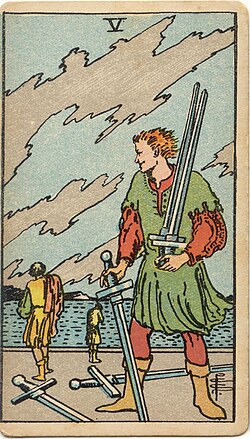
A smirking man in the foreground gathers up swords, with others lying on the ground. Two figures walk away toward the shore, backs turned, under a stormy sky. The scene suggests a contest won, with something left behind.
The Five picks up where the sparring ends. Someone has gotten what they came for and the others have left the field, yet the picture feels uneasy rather than triumphant. Swords can win arguments, and this card asks what else was spent in the process: trust, warmth, a friendship. It is no judgment on standing up for yourself, only a prompt to look at the whole outcome. In a dispute, it helps to ask what you actually want from it.
Five of Swords in Love
In relationships, this card often describes arguments where one person “wins” and both feel worse, or a habit of keeping score. The invitation is to ask what you want more, being right or being close. Reversed, it can mean an apology, a truce, or resentment that never fully cleared.
Five of Swords at Work and With Money
At work it can show office rivalry, a negotiation where the other side feels beaten, or a gain that came at someone else’s expense. Think about the long game and the relationships involved. Reversed, it can suggest mending a professional rift, or carrying a grudge that quietly limits you.
Five of Swords as a Yes or No Answer
Leans no. The Five of Swords leans no when the path to the answer involves winning at another person’s expense. Look at what the result would cost before you chase it.